Dubai’s skyline is a testament to innovation, luxury, and functionality, but beneath its iconic design lies a unique set of challenges for interior fit-outs. Harsh desert conditions, extreme temperatures, high humidity near the coast, and frequent dust storms all place tremendous stress on interior materials. At the same time, sustainability has moved from being a luxury to a necessity, with government regulations, LEED certifications, and client demand pushing contractors toward eco-conscious design. For Dura Al Taj Contracting, the selection of materials and finishes must balance durability, comfort, aesthetics, and environmental responsibility.
This comprehensive guide explores materials, finishes, and sustainability trends that are particularly suited for Dubai’s climate, with practical insights for commercial, residential, and retail fit-outs.
Table of Contents
Understanding Dubai’s Climate Challenges
Before discussing specific materials, it is critical to understand why Dubai’s climate influences interior fit-out decisions:
- High Temperatures: Summer temperatures regularly exceed 40°C, increasing cooling loads and the need for materials that can resist heat without warping, fading, or degrading.
- Humidity Fluctuations: Coastal areas experience high humidity, which can cause mold, swelling in wood, or corrosion in metals if the wrong materials are chosen.
- Sand and Dust: Frequent dust storms settle on surfaces, clog ventilation systems, and can damage delicate finishes over time.
Given these conditions, interior materials must be thermally stable, moisture-resistant, easy to clean, and durable, while finishes should maintain their aesthetic appeal under harsh light and environmental stress. Additionally, innovative materials and climate-adaptive technologies can further improve comfort, reduce energy use, and extend the lifespan of interiors.
Sustainable Interior Materials for Dubai
Dubai’s sustainability initiatives, such as the UAE Energy Strategy 2050 and Estidama Pearl Rating, encourage the use of eco-friendly materials. Here’s a detailed look at materials that combine durability with environmental responsibility:
1. Reclaimed and Sustainable Wood
Bamboo Flooring and Panels:
- Bamboo is highly renewable and grows rapidly, making it one of the most sustainable flooring options.
- Naturally resistant to humidity fluctuations and insect damage, bamboo stays cooler than traditional wood under Dubai’s heat.
- Ideal for flooring, wall cladding, and furniture.
Reclaimed Wood:
- Salvaged wood from old buildings or factories provides unique textures and finishes, reducing the need for new timber.
- It’s suitable for feature walls, cabinetry, and furniture, offering visual character and environmental savings.
Practical Tip: Use engineered bamboo or laminated reclaimed wood for areas exposed to high footfall or sunlight, ensuring long-term durability.
2. Natural Stone and Recycled Materials
Natural Stone Finishes:
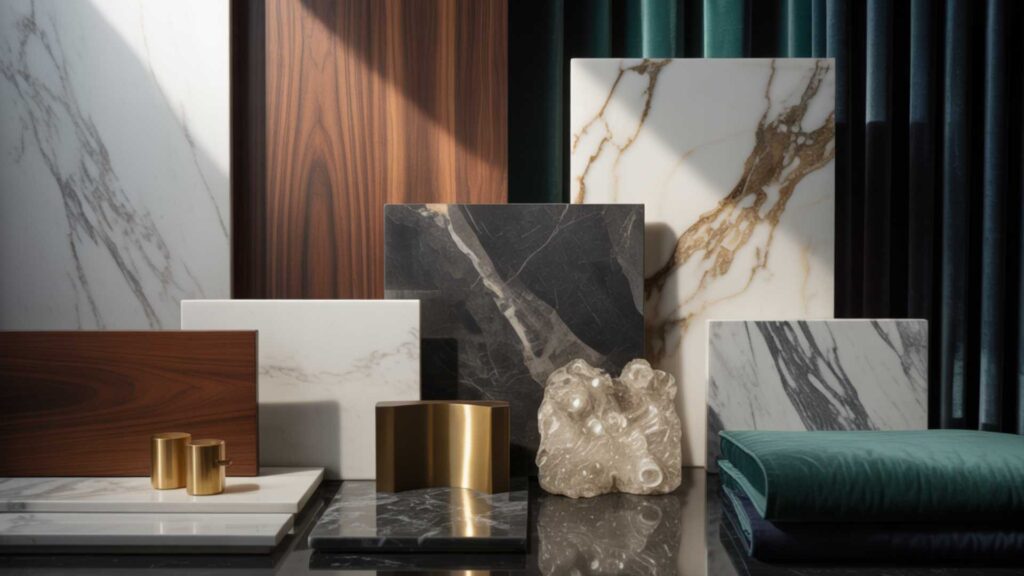
- Limestone, sandstone, and travertine provide thermal mass, absorbing heat during the day and releasing it at night.
- These stones are durable, scratch-resistant, and low-maintenance, ideal for both flooring and wall panels.
Recycled Glass Tiles and Countertops:
- Glass tiles made from recycled bottles or industrial glass reduce landfill waste while offering a sleek, contemporary look.
- Heat-resistant and easy to clean, these surfaces are excellent for kitchens, bathrooms, and retail counters.
Recycled Stone Surfaces:
- Crushed or repurposed stone can be incorporated into terrazzo flooring or decorative panels, reducing quarrying and energy use.
3. Low-Volatile Organic Compound (VOC) and Natural Finishes
Clay-Based Plasters and Paints:
- Clay plasters naturally regulate indoor humidity by absorbing moisture when the air is humid and releasing it when it’s dry.
- They are chemical-free, non-toxic, and create warm, natural aesthetics ideal for Dubai’s interiors.
Low-VOC Paints:
- Volatile organic compounds (VOCs) are harmful to indoor air quality and can trigger headaches or allergies.
- Low- or zero-VOC paints are now widely available and are particularly recommended for offices, residential units, and hospitality spaces.
A Useful Practical Tip: Choose clay or lime-based paints for feature walls; they also enhance indoor thermal comfort.
4. Cork and Hemp-Based Materials
Cork Flooring and Wall Panels:
- Cork is harvested without harming trees, making it renewable.
- It offers thermal and acoustic insulation, soft underfoot comfort, and moisture resistance, ideal for bedrooms, offices, or conference rooms.
Hemp-Based Textiles:
- Hemp is durable, breathable, and naturally resistant to mold.
- UAE suppliers have developed blends suitable for furniture upholstery, curtains, and rugs, providing eco-friendly options that withstand Dubai’s climate.
5. Metal and Glass in Sustainable Interiors
Powder-Coated Aluminum:
- Lightweight, corrosion-resistant, and thermally stable, aluminum is ideal for window frames, partition systems, and furniture.
- Powder coating ensures durability in high UV conditions, preventing fading or peeling.
Solar-Reflective Glass:
- Glass facades or interior partitions with reflective coatings reduce solar heat gain, lowering air-conditioning demand and improving occupant comfort.
Climate-Adaptive Technologies
To optimize comfort and energy efficiency, interior design in Dubai increasingly integrates advanced technologies:
- Phase-Change Materials (PCM): Integrated into walls or ceilings, PCMs absorb heat during the day and release it at night, reducing cooling load.
- Thermal-Reflective Coatings: Minimize heat absorption on walls and ceilings.
- Automated Shading Systems: Smart blinds or louvers reduce solar gain while maintaining daylight.
- HVAC-Integrated Filtration & Dehumidification: Critical for coastal areas to maintain air quality and prevent mold.
- Smart Ventilation & IoT Sensors: Adjust airflow, temperature, and lighting automatically for energy efficiency and comfort.
Sustainability Trends in Dubai’s Interior Design
Sustainability in Dubai is a strategic requirement. Interior contractors must integrate environmentally responsible approaches across material selection, energy use, and overall design strategy.
1. Biophilic Design
- Biophilic interiors incorporate natural elements such as plants, water features, daylight, and natural textures.
- Benefits: Enhanced well-being, reduced stress, improved productivity, and air purification.
- Practical example: Incorporating green walls in office lobbies or indoor plants in hospitality spaces reduces heat absorption and improves indoor air quality.
2. Energy-Efficient Solutions
- LED lighting, motion sensors, and smart dimming systems drastically reduce energy use.
- Smart HVAC systems can adjust temperature based on occupancy, reducing energy waste in commercial spaces.
- Solar-ready designs allow integration of photovoltaic panels, particularly in villas and corporate offices.
3. Water Efficiency
- Low-flow faucets, dual-flush toilets, and drought-tolerant landscaping conserve water.
- Smart irrigation systems for courtyards or outdoor terraces are particularly important in desert climates, reducing unnecessary water consumption.
4. Waste Reduction and Circular Economy
- Prefabricated components reduce on-site construction waste.
- Recycling wood, metal, and stone prevents unnecessary landfill disposal.
- Modular furniture and partitions allow spaces to be adapted or reused without replacement.
5. Smart Technology Integration
- Automated climate and lighting controls optimize energy and comfort.
- Sensors detect occupancy, adjusting AC or lighting, reducing both energy and maintenance costs.
- Smart materials, like phase-change panels, regulate indoor temperatures by storing and releasing heat.
Sustainable Office Fit-Out Practices
Commercial interiors require careful selection to balance durability, functionality, and sustainability:
- VOC-Compliant Finishes: Non-toxic paints, adhesives, and sealants improve indoor air quality and align with green certifications.
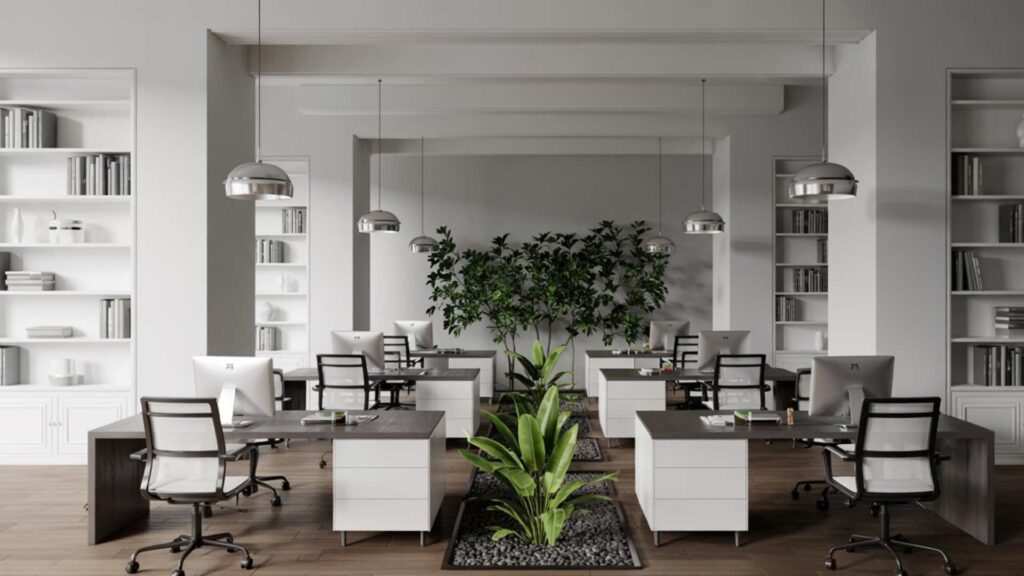
- Health-Focused Furniture: Ergonomic chairs, sit-stand desks, and recycled-content furniture support wellness while minimizing environmental impact.
- Prefabricated or Modular Systems: Reduce construction waste, accelerate project timelines, and allow future reconfiguration with minimal environmental impact.
- Compliance with Green Building Standards: Adhering to LEED, WELL, or Estidama ensures that projects meet international sustainability benchmarks.
Practical Material Selection for Different Fit-Out Types
Fit-Out Type | Recommended Materials & Finishes | Sustainability & Climate Considerations |
Office Spaces | Low-VOC paints, bamboo flooring, recycled glass panels, energy-efficient LED lighting, modular partitions | Reduces indoor pollutants, lowers cooling loads, and allows flexible, reusable layouts |
Retail Outlets | Reclaimed wood shelves, terrazzo flooring, clay wall finishes, solar-reflective glass | Durable against foot traffic, thermally stable, reduces environmental impact |
Residential Units | Cork or bamboo flooring, clay plasters, hemp textiles, energy-efficient appliances | Comfortable underfoot, naturally insulating, promotes well-being |
Hospitality & Hotels | Natural stone surfaces, recycled glass countertops, biophilic elements, smart HVAC | Enhances guest comfort, supports certifications, and reduces energy use |
Emerging Materials & Technologies for Dubai Interiors
- Lightweight, Low-Carbon Composites: Reduce embodied energy in ceilings, partitions, or furniture.
- Acoustic Comfort Materials: Cork, recycled textiles, or hemp blends for offices and hotels.
- Smart, Multi-Functional Surfaces: Writable walls, sensor-integrated panels, and modular designs for flexible, adaptive interiors.
- Lifecycle-Oriented Selection: Prioritize materials with long lifespan, low maintenance, and recyclability to reduce long-term environmental impact.
Recommendations for Dura Al Taj Contracting
To align with Dubai’s climate and sustainability trends, contractors should:
- Prioritize Climate-Resistant Materials: Durable wood, natural stone, and moisture-resistant finishes ensure long-term performance in extreme heat and humidity.
- Embrace Energy Efficiency: Integrate LED lighting, smart HVAC, and solar-ready systems to reduce operational costs and carbon footprint.
- Promote Water and Waste Management: Use low-flow fixtures and modular components to reduce resource use and landfill waste.
- Focus on Indoor Well-Being: Incorporate biophilic design, low-VOC materials, and smart ventilation systems for healthy indoor environments.
- Target Green Certifications: Aligning projects with LEED, Estidama, or WELL certification enhances reputation and appeals to environmentally conscious clients.
By implementing these strategies, Dura Al Taj Contracting can deliver interiors that are visually striking, climate-resilient, and sustainable, positioning themselves as a forward-thinking leader in Dubai’s interior fit-out industry.
Conclusion
Dubai’s interior design landscape is evolving. The combination of extreme climatic conditions and growing environmental awareness means contractors must carefully select materials and finishes that withstand heat, humidity, and dust while supporting sustainability. Reclaimed wood, bamboo, cork, natural stone, clay finishes, and smart technologies are essential components of modern, responsible interior design.
By embracing these materials and trends, Dura Al Taj Contracting can deliver interiors that are durable, energy-efficient, and aligned with global sustainability practices, ensuring that every project is future-proof, comfortable, and environmentally responsible.