A warehouse handover is the moment a built asset becomes a functioning business enabler. In Dubai’s fast-paced logistics market, a flawed or rushed handover can cause operational delays, safety risks and unexpected costs that compound across the supply chain. Preparing for handover with discipline reduces risk, accelerates occupancy, and protects long-term asset value.
This guide explains the full handover process with a practical checklist and industry best practices tailored to Dubai’s climate, regulations and logistics corridors.
Table of Contents
Why a disciplined handover matters
The handover stage converts technical completion into operational readiness. For warehouse owners, tenants and logistics operators, a proper handover ensures the building performs as promised: correct clear heights, reliable utilities, compliant fire systems, robust security and documented asset data. Problems discovered after opening are more expensive to fix and often disrupt service. A deliberate handover protects safety, preserves warranties and gives facility teams a clear starting point for lifecycle management.
Step 1 — Prepare before the handover date
Successful handovers begin weeks before the scheduled handover. Use this period to align stakeholders, assemble documents, and confirm logistics.
Key actions:
- Confirm the handover schedule with the main contractor, subcontractors, client representatives and any third-party certifiers. Fix a specific date for the physical walk-through and a contingency date for unresolved items.
- Assemble documentation: latest as-built drawings, shop drawings for MEP systems, commissioning reports, test certificates, material warranties and contract close-out documents.
- Create a handover team: appoint a client-side lead (facility manager or operations manager), a contractor representative, a third-party inspector (if used) and health & safety officer. Define contact points and escalation paths.
- Issue a preliminary snagging list from existing quality checks so the contractor can address obvious defects prior to the formal inspection.
- Plan for utilities and access: ensure electricity, water and any special services (chilled water, gas, fuel) are available for testing. Confirm site access for heavy vehicles and equipment needed during inspection.
Preparation reduces surprises and shortens the formal handover exchange.
Step 2 — Structural and architectural verification
Start the physical inspection with the building itself. Structure and finishes determine whether the space can host intended operations.
Inspection checklist:
- Clear height and column grid: verify clearances for racking, forklift reach and any mezzanine structures. Measure at multiple points and compare with approved drawings.
- Floor condition and flatness: test for spalling, cracks, flatness tolerances and suitability for pallet racking and heavy loads. Confirm floor hardener application and load capacity in racking zones.
- Roof and cladding: inspect roof membranes, insulation, joints and internal signs of water ingress. In Dubai’s climate, roof waterproofing and thermal performance are critical.
- Mezzanine and access platforms: confirm base plates, staircases, handrails and load ratings.
- Doors, docks and seals: verify operation of roller shutters, dock levellers and weather seals to protect temperature-sensitive storage.
Record deviations as punch-list items with photographic evidence and target completion dates.
Step 3 — Mechanical, electrical and plumbing (MEP) systems
MEP systems define operational capability. Each system requires commissioning evidence and confirmatory testing.
Systems to verify:
- Electrical distribution: check main switchgear labels, phase balance tests, earth resistance values, emergency power circuits and lightning protection. Confirm lighting levels in work and racking zones meet required lux values.
- Lighting and emergency lighting: verify energy-efficient fittings, controls and emergency illumination duration and coverage.
- HVAC and ventilation: inspect AHUs, ductwork, controls and commissioning records. For cold storage, verify temperature stability across zones and defrost/recovery performance.
- Fire protection and alarm: review hydraulic calculations for sprinklers, flow test reports, smoke detector zoning and fire alarm panel programming. Confirm hydrant pressure tests and emergency signage.
- Water supply and drainage: confirm yard drainage performance and absence of ponding after water tests. Inspect grease traps, sewer connections and potable water provisions.
- Special utilities: fuel systems, compressed air, nitrogen lines, or other process utilities must have pressure tests, certificate of conformity and isolation points clearly marked.
Obtain commissioning certificates and calibrated instrument logs for each major system.
Step 4 — Safety, security and regulatory compliance
Dubai enforces safety and regulatory standards that warehouses must meet. Confirm compliance and secure the required approvals.
Key items:
- Civil Defence and Dubai Municipality approvals: ensure necessary certificates are in place. If a special permit or re-inspection is required, capture timelines.
- Fire safety: ensure emergency exits, muster points, alarm response procedures and firefighting equipment are operational. Validate staff evacuation plans and assembly area signage.
- Security systems: test perimeter fencing, gates, barrier arms, CCTV coverage, cameras’ pan/tilt/zoom functionality and storage retention settings. Confirm integration with access control systems and logging.
- Health & Safety protocols: review workplace hazard signage, PPE provisioning, first-aid stations and confined-space safety if applicable.
- Environmental controls: confirm waste handling, spill response arrangements and dust control measures are documented.
Document all approvals and retain contact details for the inspecting authorities.
Step 5 — Documentation transfer and warranties
Handover is a legal and operational handoff. Documentation must be comprehensive, organized and accessible.
Essential documents:
- As-built drawings: full set of architectural, structural and MEP as-built drawings with revision history.
- Operation & Maintenance (O&M) manuals: system-level manuals containing maintenance intervals, spare parts lists and supplier contacts.
- Test and commissioning certificates: for electrical, fire, HVAC and any special systems.
- Material warranties and guarantees: clearly state start and expiry dates and claim procedures.
- Spare parts and recommended spares: list of critical spares provided at handover.
- Service contracts: details of warranties, maintenance contracts and any transition of outsourced services.
Hand documents in both paper and searchable digital formats. Place the digital set in a secure shared folder and provide the facility team with credentials.
Step 6 — Operational readiness and fit-out coordination
After technical handover, the space must be validated for day-to-day operations.
Operational checks:
- Racking layout and loading plans: confirm racking locations align with structural load capacities and fire compartmentalization requirements.
- Forklift and vehicle circulation: simulate goods-in/goods-out flows with forklifts, check turning radii and dock sequencing.
- Receiving and dispatch protocols: test dock operations, pallet handling areas, staging zones and signage.
- IT and communications: ensure Wi-Fi coverage, warehouse management system (WMS) readiness, barcode scanning infrastructure and data cabling are active.
- Staff induction and safety drills: schedule training on site rules, emergency procedures and equipment use. Conduct at least one evacuation drill before full occupancy.
- Trial runs: run controlled operations with limited inventory to test workflows and identify bottlenecks.
Use trial operations to refine SOPs and adjust the snag list before full ramp-up.
Step 7 — Closing the snag list and final acceptance
A robust punch-list process keeps responsibility clear and avoids ownership disputes after handover.
Process:
- Prioritize items by safety critical, operational impact, cosmetic. Safety items must be closed before occupation.
- Assign responsibilities and deadlines for each punch-list item with acceptance criteria.
- Track progress using shared tracking tools and photographic evidence. Hold weekly close-out meetings until completion.
- Issue final acceptance certificate only when critical and major items are resolved and documentation is complete. Note minor, non-operational items with agreed completion dates and retentions where contractually appropriate.
Define retention release criteria to align financial closure with physical completion.
Best practices for a smooth handover
A warehouse handover reflects the quality of both construction and project management. Every stage leading to the final delivery must show coordination, documentation accuracy, and client satisfaction. The following practices help ensure the process moves seamlessly from site completion to client operation.
1. Begin Handover Planning Early
Handover planning should start months before construction concludes. Integrate key handover milestones into the construction and procurement schedules to ensure every system and deliverable aligns with project timelines. Preparing documentation, listing inspections, and tracking snag items early avoids last-minute pressure and gives all teams, including construction, MEP, and facility management, enough time to verify systems and resolve issues before the official inspection.
2. Maintain Transparent Communication
Consistent communication between contractors, consultants, and clients prevents misunderstandings. Schedule regular review meetings to discuss completion status, outstanding work, and documentation requirements. Using shared dashboards or digital snag lists helps track progress efficiently and ensures accountability across all project stakeholders.
3. Keep Documentation Organized and Digitised
All warehouse handover documents must be properly compiled, digitized, and stored in a searchable document management system. This includes completion certificates, test reports, utility approvals, and equipment manuals. A digital handover file helps clients retrieve critical information easily, supports audits, and reduces the risk of misplaced records during future maintenance.
4. Conduct Detailed Quality Checks and Commissioning
Quality inspections should go beyond visual assessments. Each structural and MEP component must meet performance standards and design specifications. Engage independent third-party commissioning agents to verify system efficiency, calibration, and safety compliance. Testing systems such as HVAC, fire alarms, and automation under operational load ensures the warehouse performs reliably once occupied.
5. Perform Specialized Technical Testing
In addition to standard inspections, conduct thermal imaging and roof drainage tests to detect hidden defects such as insulation gaps, moisture leaks, or uneven slopes. Identifying these issues before occupancy prevents costly rework and supports long-term building performance.
6. Ensure Safety Compliance
In Dubai, safety compliance is a key requirement during handover. Confirm that fire safety systems, emergency exits, ventilation, and signage follow local Civil Defense standards. A safety inspection certificate adds credibility and protects the client from future legal or operational risks.
7. Train Facility Staff
The client’s facility management team should be trained on operating systems and maintenance schedules. Explaining routine checks, equipment handling, and warranty conditions helps avoid downtime and ensures a smooth operational transition from construction to daily use.
8. Tag and Record Assets for Maintenance
All installed assets, from HVAC units to lighting panels, should be physically tagged and registered in an asset database. Linking these tags with warranty information and maintenance schedules helps the client’s facility management team monitor performance, track replacements, and plan servicing more efficiently.
9. Engage Operations Early
Involve warehouse supervisors and facility managers during the commissioning phase. Their practical feedback on access, workflow, and system usability helps fine-tune settings and identify operational constraints before occupancy. This collaborative approach ensures the facility is ready for real-world use on day one.
10. Verify Utility Connections and Permits
Final approvals from DEWA, Civil Defense, and Dubai Municipality must be secured before handover. Any pending NOCs or incomplete connections can delay the client’s move-in timeline. A detailed final checklist should confirm that all utilities are active, properly tested, and officially transferred to the client.
11. Document the Final Snag Closure
A comprehensive snag list with photographic evidence and consultant sign-off ensures transparency. Each item should be verified as completed before final approval. A zero-snag report is one of the strongest indicators of a professionally managed warehouse project.
12. Plan Initial Maintenance
Schedule the first preventive maintenance cycle within 30 days of handover to detect early signs of system wear or calibration issues. Establishing this routine demonstrates proactive management and supports long-term operational reliability.
13. Maintain a Controlled Change Log
Any modifications made post-handover, such as layout adjustments, electrical rerouting, or equipment replacements, should be logged systematically. A controlled change register helps maintain warranty validity and provides traceability for future audits.
14. Schedule a Joint Walkthrough
Before the handover meeting, organize a joint walkthrough with the client and consultant. This session confirms that the warehouse meets all contractual expectations. It also allows clients to ask questions about systems, finishes, or maintenance requirements directly on-site.
15. Provide Post-Handover Support
Support does not end once keys are handed over. Offering a short-term defect liability period and quick-response assistance shows commitment to quality. Clients value contractors who remain available during the initial operational phase to address minor adjustments or technical clarifications.
Support does not end once the keys are handed over. Retain contractor involvement during the initial operational ramp-up to resolve latent defects or system queries promptly. Offering a short-term defect liability period and rapid-response assistance reinforces client trust and ensures a smooth transition from construction to operation.
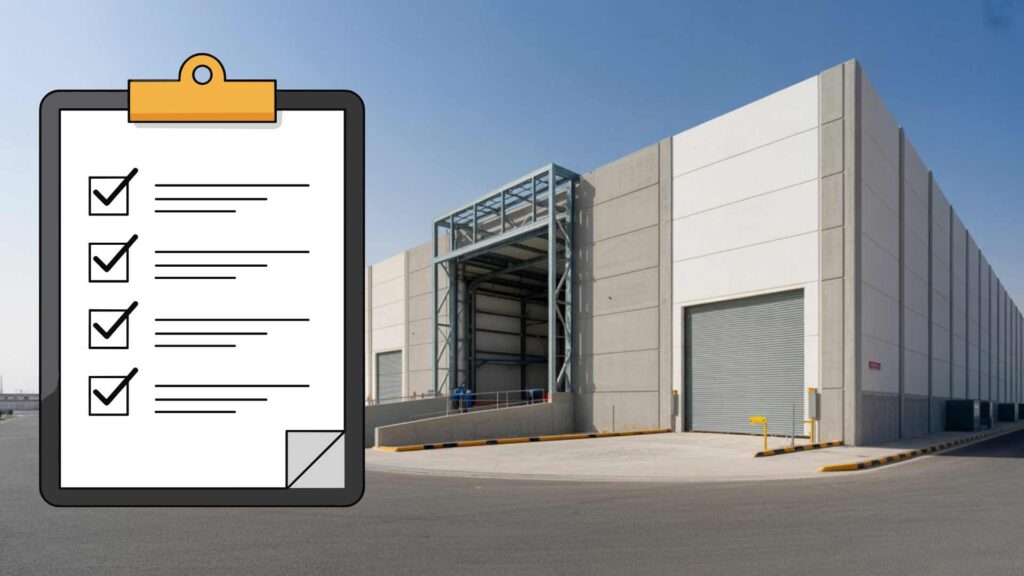
Handover checklist
Essential items to confirm before signing for handover:
- As-built drawings and O&M manuals delivered
- Commissioning certificates for electrical, HVAC and fire systems
- Structural checks for floor flatness and clear height
- Roof waterproofing and drainage verification
- Functional dock levellers and loading doors
- Electrical distribution, earthing and emergency lighting tested
- Fire alarm, sprinkler and hydrant systems commissioned
- CCTV and access control operational
- Regulatory approvals and certificates issued
- Asset register created and critical spares listed
- Staff induction and emergency drill completed
- Punch-list with agreed completion dates
Conclusion and call to action
Handing over a warehouse in Dubai requires a meticulous approach that spans technical verification, documented approvals and operational validation. A properly executed handover protects asset performance, secures warranties and provides a clear path to efficient operations.
Durra Altaj Contracting delivers handover-ready warehouses with rigorous commissioning, detailed documentation and practical collaboration with operations teams. If you are preparing for a warehouse handover in Dubai and want a partner who understands construction, compliance and operational readiness, contact Durra Altaj Contracting for a site-specific handover plan and on-ground support.