Dubai’s homes and modern living spaces increasingly rely on epoxy flooring for its seamless finish, stain resistance, and ability to transform rooms into clean, durable environments. The system performs extremely well when conditions are controlled, and the concrete is prepared correctly.
However, Dubai’s climate and building practices introduce stresses that influence how epoxy bonds, cures, and behaves over time. High humidity, intense heat, moisture movement through concrete, and thermal shifts all affect the stability of the coating.
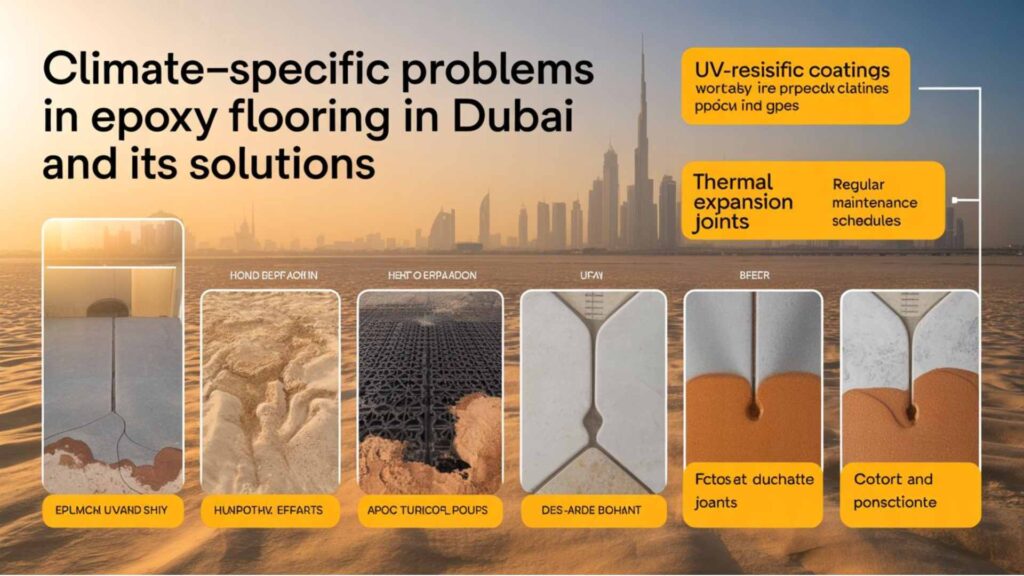
This guide explains the climate-specific issues Dubai homeowners face and the solutions that protect epoxy floors from premature damage. It also outlines the installation approaches that help Dura Altaj Contracting deliver long-lasting, climate-ready flooring systems.
Table of Contents
1. Heat-Driven Curing Problems
Dubai experiences long periods of extreme heat. During summer, surface temperatures in garages, terraces, and ground-level rooms can rise much higher than the ambient air temperature. Epoxy resins respond quickly to heat, and this causes several curing challenges:
How Heat Affects Epoxy
- Faster chemical reaction
- Shorter working time (pot life)
- Uneven film formation
- Higher risk of roller marks and texture variation
- Increased likelihood of surface defects
- Possible brittleness if the system cures too rapidly
Rooms exposed to sunlight through windows or glass doors can reach elevated temperatures even indoors.
Solutions
- Schedule installations during cooler morning hours or cooler seasons
- Use climate-controlled environments, temporary shading, or cooling
- Select epoxy systems formulated for warm climates
- Ensure the slab temperature is monitored before application
- Train installers to adjust working speed and material quantities in hot conditions
Dura Altaj Contracting prepares detailed temperature plans before each project, ensuring the coating cures at a stable rate.
2. Moisture Vapor Movement in Concrete Slabs
Dubai’s ground moisture levels fluctuate across residential neighbourhoods, especially in areas with landscaping, irrigation, or high groundwater presence. Older villas and uninsulated slabs often allow moisture vapor to rise through the concrete.
How Moisture Creates Problems
- Blistering and bubbling
- Peeling or sheet-like delamination
- Soft or uncured patches beneath the coating
- Staining caused by moisture-soluble salts
- Weak bond strength
Epoxy relies on a dry, stable surface. Continuous vapor movement undermines its adhesion.
Solutions
- Moisture testing before installation (RH tests, moisture vapor emission tests)
- Use of moisture-tolerant primers
- Installation of moisture mitigation barriers when levels exceed safe limits
- Repair of cracks and pathways that allow vapor to escape
- Ensuring adequate ventilation in enclosed spaces
The expert team at Dura Altaj Contracting conducts moisture diagnostics on every project to ensure system compatibility with the slab.
3. High Humidity and Condensation Risks
Dubai’s humidity levels rise significantly during certain months. When warm, humid air enters a cooled room, condensation forms on the slab. Even microscopic moisture creates adhesion failure.
Humidity-Related Problems
- Blushing or cloudy patches
- Sticky or tacky surfaces
- Poor intercoat adhesion
- Weak bond strength at the primer layer
- Textural inconsistencies during curing
Condensation often goes unnoticed because it forms and evaporates quickly.
Solutions
- Control humidity with dehumidifiers or temporary cooling
- Keep windows and doors closed during installation
- Allow the floor to acclimate before application
- Conduct a substrate moisture check immediately before priming
- Maintain a stable environment throughout the curing period
Dura Altaj teams monitor humidity at every stage, especially during night or early morning work.
4. UV Exposure and Sun-Driven Yellowing
Epoxy resins naturally change colour when exposed to sunlight. Rooms with large windows, skylights, or open garage doors experience UV exposure daily.
Common UV-Related Issues
- Yellowing
- Loss of gloss
- Surface chalkiness
- Gradual discoloration, especially in light-coloured floors
Even indirect sunlight can influence the appearance over time.
Solutions
- Apply UV-stable polyurethane or polyaspartic topcoats
- Use pigments and systems engineered for high-light environments
- Protect newly applied floors from sunlight until fully cured
Our team recommends topcoat systems built for Dubai’s sun exposure levels.
5. Thermal Expansion and Contraction
Dubai’s interiors often alternate between outdoor heat and strong indoor cooling. This creates movement in the concrete slab.
How Thermal Movement Affects Epoxy
- Hairline cracks in the coating
- Opening of pre-existing concrete cracks
- Localised delamination where movement concentrates
- Stress lines visible under decorative systems
These issues develop gradually and often appear during seasonal temperature shifts.
Solutions
- Crack treatment before installation
- Use of flexible membranes in movement-prone areas
- Detailed inspection of joints and slab behaviour
- Layer systems that accommodate standard expansion
Dura Altaj includes a slab stability assessment in all residential epoxy projects.
6. Substrate Contamination from Coastal Salts
Homes located near Dubai’s coastal regions experience salt accumulation on driveways, garages, and ground floors. Salt can become embedded in concrete surfaces.
Salt-Related Issues
- Weak bonding
- Efflorescence patches
- Blistering caused by salt-induced moisture attraction
- Uneven curing
Solutions
- Deep grinding or shot-blasting
- Salt neutralisation treatments
- Moisture-resistant primer systems
- Thorough cleaning before priming
Proper surface preparation is essential when salt exposure is present. Dura Altaj follows multi-stage cleaning procedures for these cases.
7. Fast-Track Renovation Challenges
Many Dubai homeowners renovate during short timelines. Rapid construction schedules often create slab conditions unsuitable for epoxy.
Problems Seen in Fast Projects
- Trapped moisture in recently repaired concrete
- Dust infiltration from ongoing construction
- Insufficient curing time for levelling compounds
- Premature coating on warm, uncured surfaces
Solutions
- Sequencing epoxy installation toward the end of renovation
- Verifying readiness of the slab with moisture and hardness checks
- Protecting the floor from surrounding trades
- Extending curing time when necessary
We also offer scheduling guidance to prevent rushed installations.
Climate-Adapted Installation Practices for Dubai Homes
A sustainable epoxy floor requires more than high-quality materials. The success of the project depends on climate-aware procedures.
Key Practices:
Monitoring temperature, humidity, and slab moisture daily
Epoxy resin reacts differently at various temperatures. Dubai’s climate can shift multiple times within a single day, especially in rooms with large windows or active cooling. Professionals track:
- Ambient temperature to adjust working times
- Slab temperature to prevent condensation
- Relative humidity to maintain safe ranges for curing
- Moisture vapor levels in the concrete to avoid pressure buildup
Consistent monitoring makes it possible to prevent rapid curing, blistering, or adhesion loss. Readings taken before, during, and after installation help verify that conditions remain stable throughout the project.
Using equipment designed for mechanical profiling
Mechanical profiling is essential for proper bonding. Diamond grinders, shot-blasting machines, industrial vacuums, and dust-control equipment create a clean and textured surface.
Dubai floors often contain construction dust, salt deposits, and micro-residues from daily use. Mechanical profiling eliminates these layers entirely and exposes healthy concrete.
Well-calibrated equipment also ensures:
- Uniform scratch patterns
- Adequate depth of surface texture
- Removal of laitance and weak concrete
- Full bonding capability across the entire floor
This process prepares the slab for a primer that grips the surface consistently.
Matching the coating system with room conditions
Each room in a Dubai home experiences different environmental stresses. Garages heat up significantly, living rooms receive filtered sunlight, basements accumulate moisture, and kitchens experience chemical exposure.
Climate-adapted system selection considers:
- Moisture-tolerant primers for ground-level slabs
- UV-resistant topcoats in sunlit rooms
- High-build layers for heavy-use areas
- Flexible membranes for locations with thermal movement
Choosing a system that matches the room’s daily conditions supports durability and reduces the likelihood of future repairs.
Documenting all installation stages
A documented installation process helps homeowners track progress, understand the work performed, and maintain accountability.
Documentation typically includes:
- Moisture testing results
- Surface preparation records
- Product batches and mix ratios
- Temperature and humidity readings
- Application sequence and timing
- Curing and protection notes
This record creates a reference for future maintenance or repairs and ensures the installation follows a structured, verifiable process.
Providing homeowners with clear aftercare instructions
After the installation, the floor needs correct handling during curing and throughout its lifecycle. Professional teams explain:
- Walking permissions
- Heavy load restrictions
- Cleaning routines
- Exposure limitations in the first 7–14 days
- Products suitable for long-term care
Clear aftercare guidance helps maintain the coating’s integrity and appearance during its initial curing period and beyond.
These steps help the epoxy floor respond appropriately to Dubai’s daily environmental shifts. Proper monitoring, surface preparation, system matching, and documentation improve stability, reduce stress on the coating, and support a visually consistent finish across the entire home.
Climate-Specific Maintenance Tips for Homeowners
Even after installation, small actions help maintain the floor’s appearance and durability.
Recommended Practices:
Clean with pH-neutral detergents
Epoxy coatings respond best to mild cleaning products. Harsh acids, strong degreasers, and abrasive powders can dull the finish or weaken the top layer.
A pH-neutral cleaner preserves the protective coating and keeps the surface smooth. Warm water, microfiber mops, and gentle detergents work effectively for daily upkeep.
Use mats at entrances exposed to heat or sand
Sand particles carried indoors by shoes or airflow can abrade the surface. Entrances facing gardens, driveways, or open garages experience the most movement of sand.
Well-placed mats reduce direct contact between sand and the epoxy coating. This simple addition lowers fine scratching and preserves the uniform sheen of the topcoat.
Inspect the floor annually for early signs of wear
Seasonal temperature changes introduce small stresses on epoxy-coated slabs. An annual inspection helps identify:
- Minor chips
- Micro-scratches
- Fading in sun-exposed areas
- Early movement at cracks
- Areas with light dullness
Timely attention prevents these issues from enlarging and allows spot repairs before they impact larger sections of the floor.
Avoid dragging heavy items directly on the surface
Furniture, gym equipment, tool cabinets, and storage racks can leave scratches or compression marks if dragged across the floor.
Using felt pads, rubber supports, or manual lifting helps maintain the surface. This habit is especially important in garages, utility rooms, and living spaces with frequent layout changes.
Maintain steady indoor temperature where possible
Rooms with strong cooling and bright sunlight experience sharp shifts in surface temperature. These shifts influence how the coating expands and contracts.
Stable temperature settings reduce stress on the floor and help the coating maintain its bond to the concrete over time.
Outcome of climate-specific maintenance
Routine care keeps the epoxy floor aligned with Dubai’s environmental conditions. These practices support the protective topcoat, maintain clarity and gloss, and reduce the risk of surface deterioration. With consistent upkeep, the floor remains visually appealing and structurally steady throughout its lifespan.
Get Climate-Ready Epoxy Systems for Dubai Homes
Epoxy flooring performs reliably in Dubai when the installation aligns with the region’s temperature shifts, moisture behaviour, humidity levels, and UV exposure. These environmental conditions influence how the coating bonds, cures, and maintains its appearance. When the system selection, surface preparation, and application follow climate-aware standards, the floor develops the strength and consistency required for long-term residential use.
Dura Altaj Contracting plans each project with this awareness. The team conducts moisture testing, evaluates slab conditions, and recommends systems that suit the environment. Installation follows structured preparation, controlled site conditions, and documented quality checks. This process supports a stable, durable, and visually consistent surface across garages, living rooms, kitchens, and multipurpose spaces.
Begin Your Climate-Ready Epoxy Flooring Project
Dura Altaj Contracting offers installation plans, moisture assessments, and coating systems designed specifically for Dubai’s environmental demands.
If you are preparing for an epoxy flooring upgrade or a new installation, our team can guide you through each step with reliable planning and disciplined workmanship.
Contact Dura Altaj Contracting now!