Across the world, construction has entered a period of reckoning. What was once an industry driven solely by speed and scale is now measured equally by sustainability and responsibility.
The urgency is clear: buildings and infrastructure together account for nearly 40% of global carbon emissions.
The industry consumes more raw materials than any other sector. Yet it also holds one of the strongest levers for climate action.
In Dubai and across the UAE, the shift toward eco-friendly construction is gaining momentum.
Government frameworks such as Estidama, LEED, and the Dubai Green Building Regulations have set new standards for energy efficiency, water management, and material sustainability.
For contractors, developers, and facility owners, this movement is not only about compliance: it’s about future-proofing their investments.
At Durra Altaj Contracting, the idea of sustainability goes beyond using “green materials.”
It’s about designing and executing buildings that deliver long-term efficiency, reduce lifecycle costs, and contribute to healthier environments.
In a region known for its ambitious skylines and harsh climates, this approach defines the next chapter of responsible construction.
Table of Contents
Why Sustainable Construction Matters for Facility Owners
Balancing Growth with Responsibility
The Middle East continues to witness large-scale industrial, commercial, and residential expansion.
Each new project adds pressure on limited natural resources. In the UAE, electricity and water demand rise sharply due to air conditioning and desalination, both energy-intensive processes.
For facility owners, this creates dual challenges: operational costs and environmental responsibility.
Eco-friendly construction directly addresses both. By using low-impact materials, energy-efficient systems, and intelligent design, a building becomes an active participant in sustainability rather than a passive consumer of resources.
Durra Altaj’s contracting teams often see sustainability as a practical strategy. A well-insulated roof or an energy-optimised HVAC system may seem like small steps, but together they significantly reduce operational loads.
Over time, such measures deliver measurable savings that far outweigh initial costs.
Economic Advantages Beyond Compliance
Many facility owners initially associate sustainability with higher expenses.
Yet studies from the World Green Building Council show that green buildings yield 8–9% lower operating costs on average and higher asset valuations.
Investors increasingly prefer portfolios with verified environmental performance, not just as a moral stance, but for long-term value stability.
In Dubai’s competitive real estate and industrial sectors, sustainability now differentiates premium projects from the rest. Buildings designed with efficient envelopes, renewable energy integration, and smart automation systems tend to attract tenants faster, retain them longer, and maintain higher resale values.
For industrial and logistics developments, efficiency translates directly to profitability.
Reduced energy consumption and water waste contribute to leaner operations and lower maintenance downtime.
A Regional Responsibility
Dubai’s sustainability drive is anchored in its Net Zero 2050 Strategy, aiming for a 100% clean energy mix by mid-century. This regional context gives contractors a defined role: implementing projects that contribute to national goals while maintaining international quality standards.
The UAE’s Green Building Regulations, Estidama Pearl Rating System, and Dubai Clean Energy Strategy 2050 set measurable benchmarks for design and execution. For contractors like Durra Altaj, alignment with these frameworks is part of professional integrity; every project is an opportunity to contribute to a broader regional vision.
Key Practices Driving Eco-friendly Construction
1. Responsible Material Selection
The environmental impact of a building begins with its materials. Cement production alone contributes nearly 8% of global CO₂ emissions, making material innovation crucial. Durra Altaj’s teams actively explore options such as:
- Recycled steel and reclaimed aggregates, reducing demand for virgin resources.
- Supplementary cementitious materials like fly ash and slag to lower cement dependency.
- Low-VOC paints, adhesives, and sealants to enhance indoor air quality.
- Sustainably sourced timber certified under FSC or equivalent standards.
Using regionally produced materials also limits transportation emissions. Beyond the ecological benefit, it supports local industries and ensures material availability for ongoing maintenance.
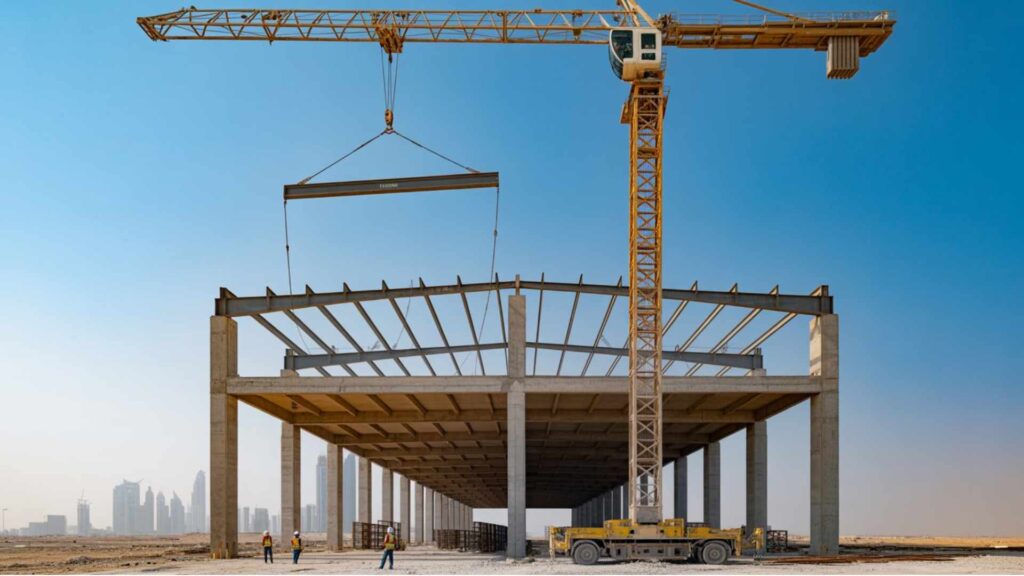
In one of Durra Altaj’s recent warehouse developments, nearly 25% of concrete was replaced with recycled aggregates, achieving substantial embodied carbon reduction without compromising strength.
2. Energy-efficient Design and Construction
Energy efficiency begins at the design table, not at completion. Orientation, shading, insulation, and glazing ratios determine how much heat a building absorbs or releases.
By incorporating passive design strategies, such as cross-ventilation, reflective roof coatings, and strategic window placement, buildings in hot climates can reduce their cooling demand dramatically.
Durra Altaj integrates Building Information Modeling (BIM) with energy simulation tools to evaluate performance early in the project lifecycle. This allows teams to test how small design modifications affect long-term consumption.
During construction, using energy-efficient equipment and smart scheduling further minimizes carbon output. Once built, automation systems like motion sensors, daylight dimmers, and programmable thermostats sustain efficiency in operation.
3. Water Management and Reuse
In the Middle East, water scarcity is one of the most pressing environmental challenges. Sustainable construction focuses on minimizing waste through greywater recycling, condensate recovery, and low-flow fixtures.
Commercial facilities can reclaim water from air-conditioning condensate for landscaping or non-potable applications. Drip irrigation systems with moisture sensors maintain greenery efficiently without unnecessary water loss.
Durra Altaj’s ongoing projects in Dubai South integrate smart irrigation systems that adapt watering schedules to real-time weather data, a small but impactful intervention in a desert climate.
4. Waste Reduction and Circular Economy
Construction and demolition waste form a large portion of landfill content globally. The solution lies in adopting a circular mindset, where waste becomes a resource.
Durra Altaj follows a structured Waste Management Plan (WMP) for every project, focusing on:
- Segregating recyclable materials such as steel, concrete, and wood at source.
- Using prefabricated components to minimize offcuts and site waste.
- Partnering with certified recyclers to ensure responsible disposal.
Prefabrication and modular construction methods also improve precision, reduce material wastage, and speed up delivery, factors that enhance both environmental and commercial outcomes.
5. Lifecycle Commissioning and Performance Monitoring
A building’s sustainability journey does not end with its handover. Real impact is achieved when operational performance matches design intent.
Durra Altaj conducts detailed commissioning to verify that HVAC, electrical, and plumbing systems run efficiently and as designed. The company also encourages clients to implement performance tracking systems that measure energy and water use throughout the building’s lifespan.
IoT sensors now allow real-time monitoring of indoor air quality, lighting, and system performance. These insights help facility managers schedule maintenance proactively and maintain efficiency targets year after year.
Embedding Sustainability Through the Contracting Process
Early Collaboration in Design
Sustainability gains momentum when it starts early. By engaging contractors at the design stage, developers can ensure the practical feasibility of green ideas.
Durra Altaj’s teams collaborate closely with architects and MEP consultants to evaluate material alternatives, simulate energy models, and estimate long-term operational outcomes. Early involvement minimizes redesigns and cost escalations later.
Sustainable Procurement and Supply Chain
Responsible sourcing is integral to eco-friendly construction. Every link in the supply chain contributes to a project’s footprint.
Durra Altaj maintains a vetted network of suppliers offering ISO 14001-certified materials and environmentally responsible production methods. Procurement is guided by criteria like recyclability, embodied energy, and durability.
Bulk procurement and optimized logistics further reduce packaging waste and fuel usage during transportation.
On-site Practices and Quality Control
Construction sites often become focal points for sustainability challenges — dust, fuel use, and waste handling.
Durra Altaj manages this through:
- Strict dust-control and noise-reduction protocols.
- Scheduled machinery usage to reduce idle fuel burn.
- Periodic audits to measure carbon output and waste segregation efficiency.
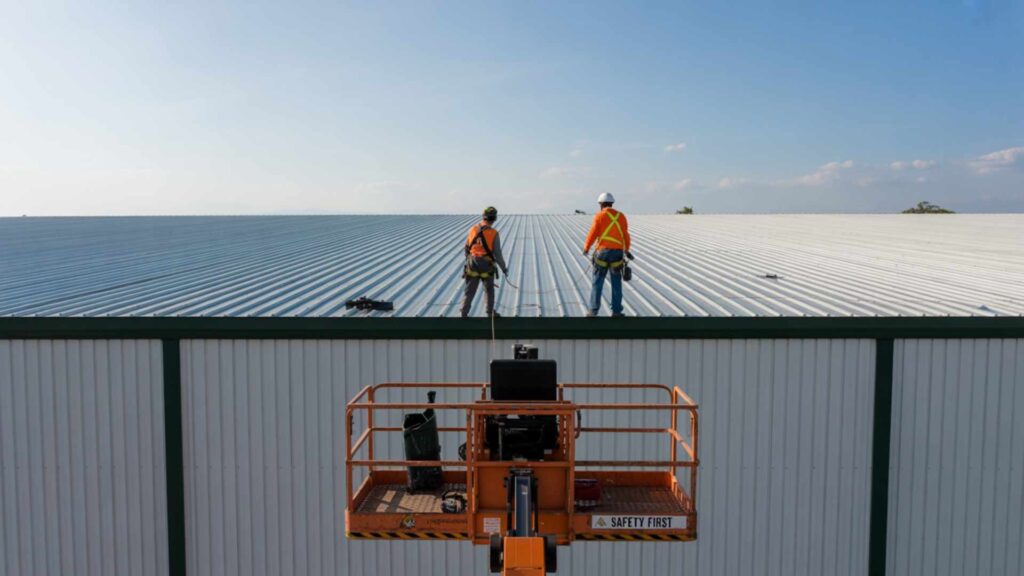
This disciplined approach creates cleaner, safer work environments and ensures compliance with Dubai Municipality’s sustainability standards.
Sustainability at Handover and Beyond
Durra Altaj’s commitment continues after project delivery. The company provides clients with a Sustainability Handover Pack, including documentation on material sourcing, performance data, and maintenance guidelines.
This enables facility managers to operate and maintain buildings according to sustainability benchmarks.
Durra Altaj also offers optional lifecycle partnerships, periodic performance audits that verify whether a building continues to meet its energy and water efficiency targets. This ongoing relationship ensures sustainability remains measurable and meaningful over time.
Next Steps for Developers and Facility Managers
1. Audit Existing Assets
Begin by evaluating energy and water consumption across existing facilities. Identify inefficiencies and set baseline metrics for improvement.
2. Define Sustainability Goals
Clear goals drive effective execution. Establish measurable targets like energy reduction percentages, water conservation benchmarks, or desired certification levels.
3. Choose the Right Contracting Partner
Sustainability requires experience. Partnering with a contractor who understands both regulatory compliance and on-ground execution ensures green intent translates into durable performance.
Durra Altaj’s integrated approach, that is, from design support to post-handover audits, offers this assurance.
4. Integrate Technology for Long-term Impact
Digital tools like BIM, IoT sensors, and automated monitoring systems provide transparency and control. They enable data-driven maintenance and help projects stay aligned with environmental goals long after construction is complete.
How Dura Altaj Contracting Contributes to Sustainable Development in Dubai
Dura Altaj Contracting aligns every project with the Dubai Green Building Regulations (Al Sa’fat). This strict compliance ensures that all construction activities meet high environmental safety standards.
The company prioritizes the use of heat-resistant materials and energy-efficient insulation. These specific materials significantly reduce the cooling load required for buildings in Dubai’s harsh climate.
Interior fit-out projects utilize low-VOC (Volatile Organic Compounds) paints and sustainable flooring options. This material selection directly improves indoor air quality for occupants.
Dura Altaj implements smart waste management by using mezzanine floor systems. This approach optimizes vertical space usage and minimizes the need for new structural footprints.
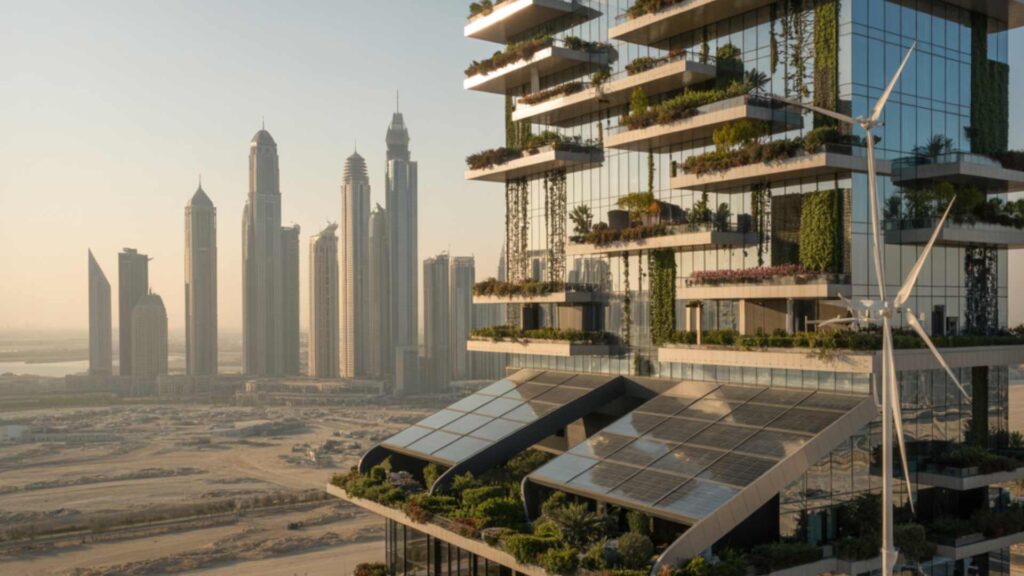
Residential projects integrate solar panel systems and LED lighting frameworks. These installations lower the long-term carbon footprint and operational costs for asset owners.
The firm extends asset lifecycles through durable epoxy flooring and waterproofing solutions. Long-lasting materials reduce the frequency of renovations and material waste.