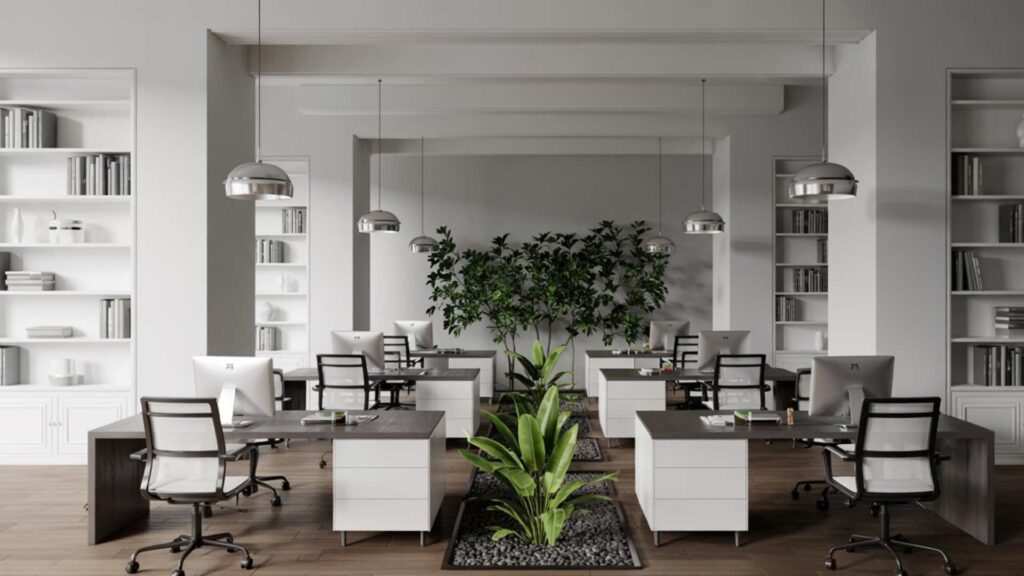
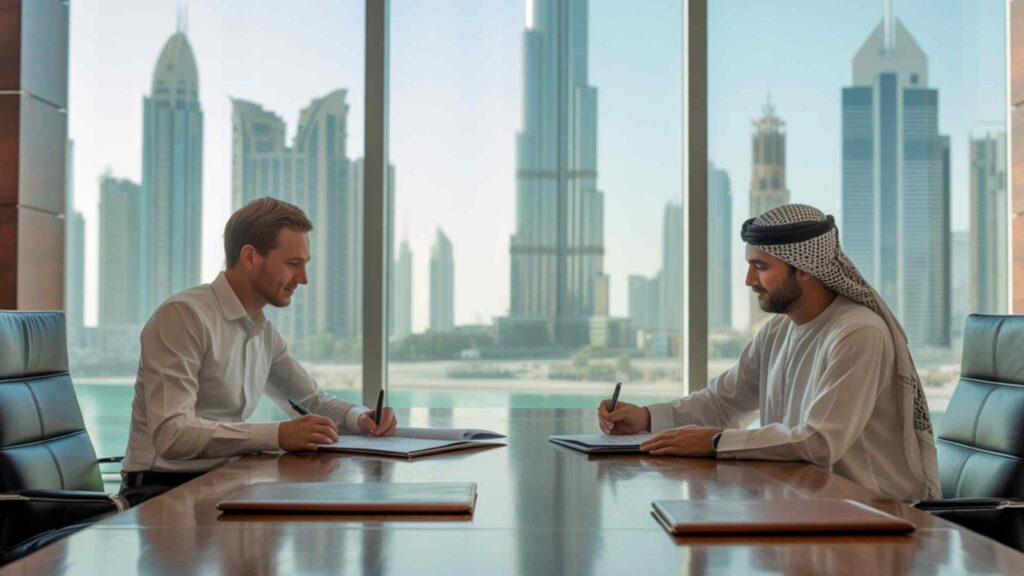
Leasing office space in Dubai can be both exciting and overwhelming. With iconic towers in Business Bay, DIFC, and emerging hubs across the city, tenants face one major decision before signing a lease: how developed is the space, and what level of fit-out do they require?
The choice between Shell & Core, Category A (Cat A), Category A+ (Cat A+), and Category B (Cat B) office fit-outs directly impacts your budget, timeline, and the flexibility to design a workspace that suits your brand and operations. Understanding the differences can save time, money, and frustration while ensuring your office meets both functional and aesthetic needs.
Table of Contents
What Is an Office Fit-Out?
An office fit-out is the process of transforming a bare building shell into a functional workspace. It starts with a “shell”, the unfinished core of a building, and progresses through various levels of development.
The fit-out determines:
- What you can expect in your space when you move in.
- How much customization is possible.
- How your office supports operations, brand identity, and employee experience.
Essentially, it sets the foundation for your office environment, encompassing structural elements, mechanical systems, furniture, décor, and technology.
Shell & Core Fit-Out
A shell-and-core space is the most basic option available. It is the building in its skeletal form, providing only the structural and mechanical essentials.
What’s included:
- Core concrete and metal framework
- Structural elements like columns, elevator shafts, and staircases
- External façade and weatherproofing
- Initial utilities, plumbing, and drainage up to the tenant’s floor
- Basic power supply and distribution boards
- Common areas such as lobbies and corridors
Pros for tenants:
- Maximum flexibility to design layouts and interiors according to business needs
- Opportunity to create a bespoke workspace that aligns with brand identity
- Often more cost-effective for long-term leases
- Some landlords may contribute to bringing the space to a Cat A standard
Cons:
- Requires substantial additional investment for interior completion
- Longer time to occupancy due to complete fit-out work
- Less suitable for short-term leases or tenants with tight budgets
In the Dubai context, Shell & Core spaces are common in premium towers where developers expect tenants to fully customize their offices. This option works well for established companies with a clear vision and sufficient budget to create a tailored environment.
Category A (Cat A) Fit-Out
A Cat A fit-out builds on Shell & Core by adding the essential interior finishes required for a basic functional office. It is often seen as a “ready-to-customize” space.
Typical inclusions:
- Raised access floors
- Suspended ceilings with basic finishes
- Basic lighting systems
- HVAC (heating, ventilation, and air conditioning)
- Fire detection and safety systems
- Bathrooms and core area facilities
Tenant benefits:
- Provides a habitable workspace without starting from scratch
- Offers a blank canvas for tenants to add their own layout and branding via Cat B fit-out
- Shorter timeline for occupancy compared to Shell & Core
Limitations:
- Limited flexibility due to pre-installed core services
- Additional cost and time required for full customization
- May not reflect the tenant’s brand or operational needs immediately
Dubai’s Cat A spaces are often targeted at tenants who want a balance between control and convenience. They are more marketable for landlords since prospective tenants can visualize an office ready for light customization. Many mid-market office buildings across JLT and Dubai Silicon Oasis favor Cat A finishes to attract SMEs and project-based businesses.
Category A+ (Cat A+) Fit-Out
Cat A+ is a relatively new concept, providing a plug-and-play solution. It sits between Cat A and Cat B, offering more functional elements than Cat A but without full tenant customization.
Inclusions:
- Partitions for meeting rooms and offices
- Basic furniture, fixtures, and equipment (FF&E)
- Workstations and collaboration spaces
- Kitchens, breakout areas, and storage
- Power, data, air conditioning, and lighting
Why it works:
- Move-in ready solution ideal for small companies, start-ups, or temporary offices
- Minimal design decisions required from tenants
- Reduces upfront fit-out timelines
Constraints:
- Limited scope for branding or design modifications
- Not fully tailored to operational needs
- Usually higher rental or fit-out contribution compared to Cat A
In Dubai’s coworking and flexible office market, Cat A+ is gaining popularity. Developers, co-working providers, and serviced offices often offer these spaces to attract tenants looking for convenience without heavy investment.
Category B (Cat B) Fit-Out
A Cat B fit-out is the final stage of customization. It turns a Cat A or Cat A+ space into a fully functional, branded office designed to meet specific operational needs.
Features include:
- Custom partitions and room layouts
- Branding elements, signage, and wayfinding
- Furniture, fixtures, and IT equipment
- Kitchens, amenities, and staff facilities
- Access control, lighting, and HVAC tailored to usage
Why tenants choose Cat B:
- Complete control over design, layout, and functionality
- Turnkey solution ready for occupancy
- Ideal for companies with a strong brand identity or specific operational requirements
Points to plan for:
- Higher upfront cost
- Longer fit-out timeline if starting from Shell & Core or Cat A
- Requires careful planning to meet regulatory compliance
Cat B is the preferred choice for larger companies or those moving into premium Dubai offices, where brand presence and operational efficiency are critical. It allows tenants to optimize space usage, employee experience, and productivity.
Local Regulatory and Compliance Insights
Dubai has strict regulations for commercial fit-outs. Understanding and managing these is critical for any office fit-out. Non-compliance can lead to costly delays, fines, or even project rework. Tenants need to consider several local authorities and standards:
Dubai Municipality (DM):
- Approves interior modifications, partitioning, and structural changes within commercial spaces.
- Ensures that building design aligns with Dubai’s planning codes, height restrictions, and energy efficiency standards.
- Review requirements for signage, branding, and lighting before installation.
Dubai Civil Defence (DCD):
- Responsible for fire safety approvals. Tenants must submit evacuation plans, fire suppression systems, and emergency access designs.
- Fire-resistant materials and automatic sprinkler systems are mandatory in most commercial spaces.
- Smoke detectors, emergency exits, and alarms must be installed according to DCD guidelines.
Dubai Electricity & Water Authority (DEWA):
- Approves power, lighting, and water connections.
- Ensures compliance with metering, load management, and energy efficiency standards.
- Tenants should verify available capacity and confirm whether additional connections or upgrades are required for IT or specialized equipment.
Green Building Compliance:
- LEED, Estidama, and other sustainability certifications are increasingly relevant in Dubai.
- Tenants should consider energy-efficient lighting, HVAC systems, and low-water plumbing fixtures.
- Using sustainable materials for partitions, flooring, and furniture may enhance compliance and reduce operating costs.
Accessibility and MEP Standards:
- Offices must meet accessibility standards akin to the UK DDA, ensuring inclusive access for all employees.
- MEP (mechanical, electrical, plumbing) systems must be designed for efficiency, safety, and scalability.
- Engaging experienced consultants early ensures that core building services support tenant requirements and sustainability goals.
Key Tip: Start approvals early. Coordinating DM, DCD, and DEWA requirements before construction avoids delays and ensures the fit-out aligns with Dubai’s commercial regulations.
Market Trends and Developer Practices
Dubai’s office market is dynamic, with developers offering different fit-out options based on building type, location, and target tenant profile. Having an idea about these trends helps tenants make strategic leasing decisions:
Developer Offerings:
- Shell & Core: Common in high-end towers such as DIFC and Business Bay, where tenants expect full customization. Developers provide the bare building structure, utilities to each floor, and shared facilities.
- Cat A / Cat A+: Mid-market and serviced office buildings often come with Cat A or Cat A+ finishes. These are easier to market and allow faster occupancy. Tenants may prefer these when moving in quickly or when operational flexibility is a priority.
- Cat B: Usually undertaken by the tenant to align with specific branding, workflow, and technology requirements. In premium spaces, developers may offer co-investment schemes for Cat B customization.
Emerging Office Trends:
- Coworking and serviced offices: Cat A+ spaces dominate this segment, offering move-in ready solutions for small businesses, startups, and flexible leases.
- Hybrid work environments: Developers increasingly provide flexible floorplates and modular partitions to support hybrid teams.
- Technology integration: Smart building features, IoT-enabled lighting, and energy management systems are becoming standard in premium office towers.
Premium vs. Mid-Market Buildings:
- Premium towers (DIFC, Business Bay) favor Shell & Core to give tenants design freedom and prestige. These spaces typically demand higher budgets and longer timelines.
- Mid-market buildings lean towards Cat A/Cat A+ finishes for faster leasing cycles and lower upfront costs. These spaces appeal to SMEs, startups, and project-based businesses.
Developer Incentives:
- Some developers offer tenant improvement allowances, shared design consultancy, or co-investment in Cat B fit-outs.
- Understanding developer practices and market norms helps tenants negotiate better lease terms and capital contributions.
Note: Assess both the developer’s offering and the building type to choose a fit-out approach that balances flexibility, cost, and timeline.
Comparative Overview Table
Feature | Shell & Core | Cat A | Cat A+ | Cat B |
Interior Completion | None | Basic finishes | Semi-furnished | Fully finished |
Customization Level | High | Moderate | Limited | Full |
Time to Occupancy | Long | Moderate | Short | Variable |
Initial Cost | Low | Moderate | Moderate to High | High |
Tenant Control | Full | Partial | Minimal | Full |
Ideal For | Bespoke designs | Personalization | Small teams/start-ups | Turnkey solutions, strong branding |
Sustainability and Practical Tenant Considerations
Sustainability is becoming a major factor in Dubai fit-outs:
- Avoid redundant Cat A installations by going straight from Shell & Core to Cat B. This reduces material waste and carbon footprint.
- Reuse furniture, partitions, and finishes when tenants vacate, avoiding full reinstatement.
- Lease clauses can replace mandatory reinstatement with a capital contribution, saving both costs and resources.
- Using durable, long-lasting materials ensures that fit-outs can be adapted or reused in future moves.
These practices benefit the environment and reduce long-term costs for tenants and landlords. Adopting these can significantly improve employee satisfaction and enhance brand reputation.
Conclusion
Choosing between Shell & Core, Cat A, Cat A+, and Cat B fit-outs is a critical step for any Dubai tenant. Each option affects cost, timeline, design flexibility, and long-term operational efficiency. Tenants must also consider local regulatory requirements, sustainability practices, and market trends to ensure their office meets both functional and brand needs.
For companies seeking a seamless fit-out experience, Durra Altaj Contracting offers expertise across all stages, from Shell & Core spaces to fully customized Cat B offices. With a deep understanding of Dubai’s regulations, market trends, and sustainable design practices, Durra Altaj helps tenants create efficient, compliant, and inspiring workspaces while optimizing cost and timeline.
By planning carefully and working with experienced professionals, tenants can secure an office space that supports growth, employee satisfaction, and long-term success from day one.